
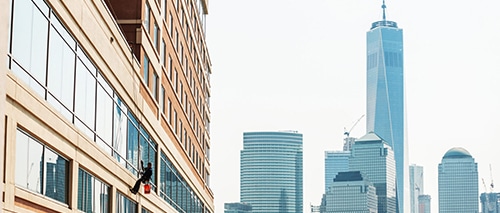
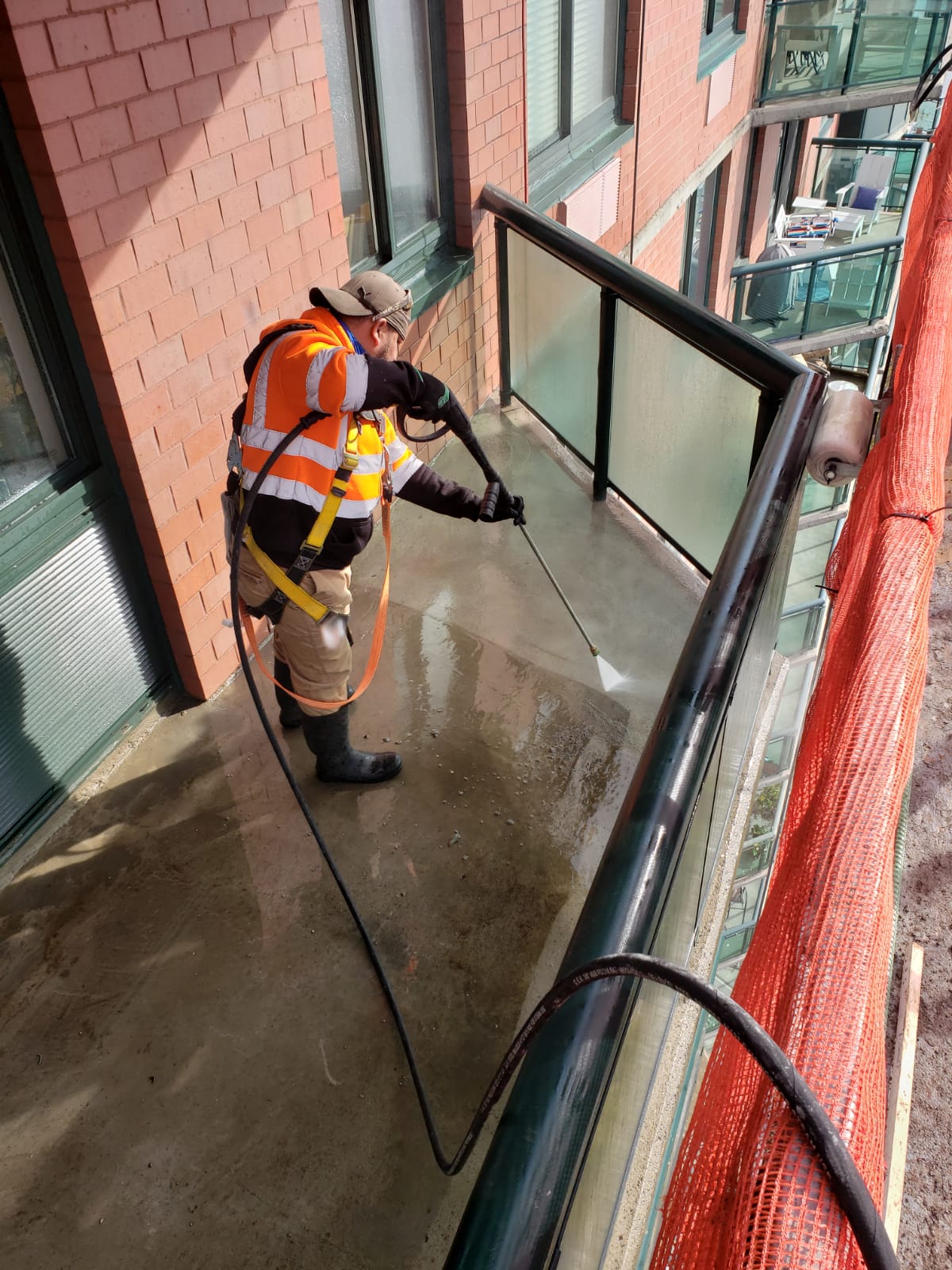
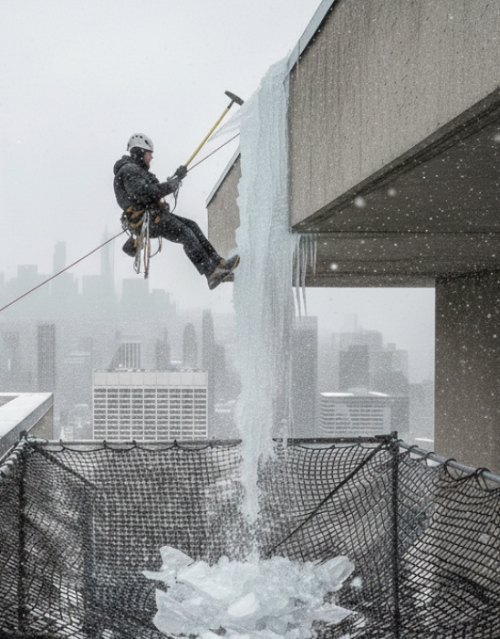
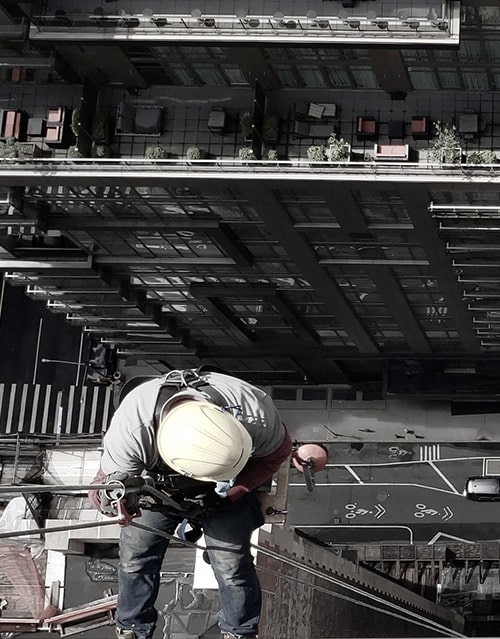
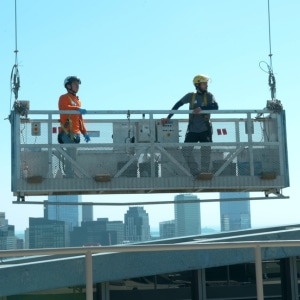

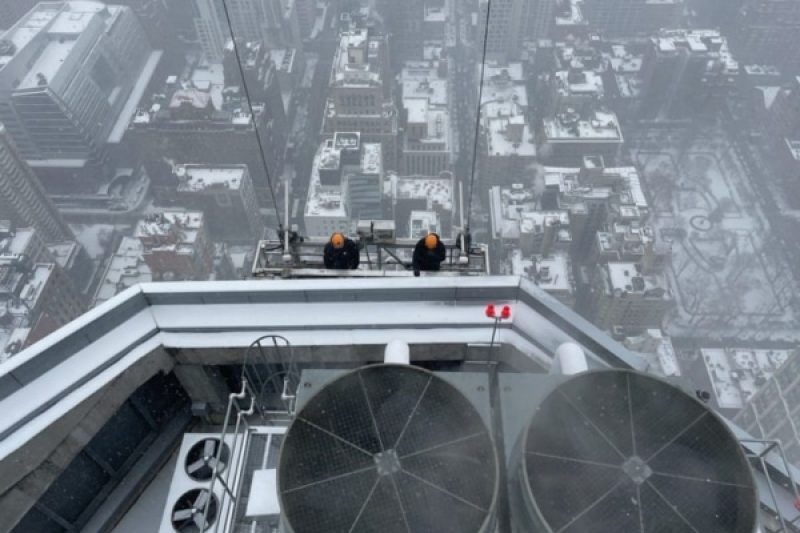
As New York heads into another season of increasingly unpredictable weather, exterior-service companies face major operational challenges. High rise window cleaning, waterproofing, caulking, and façade maintenance, depends heavily on safe environmental conditions. When extreme weather hits, everything changes: schedules, manpower, equipment, and safety procedures.
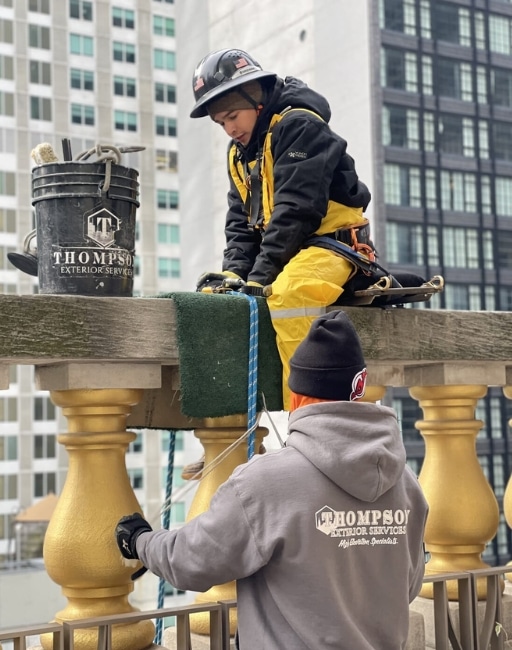
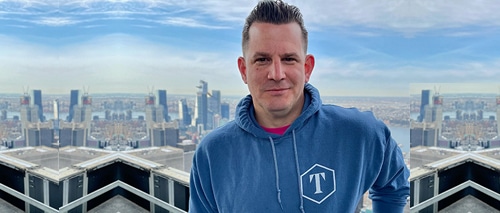
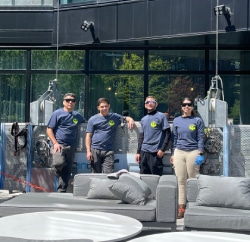
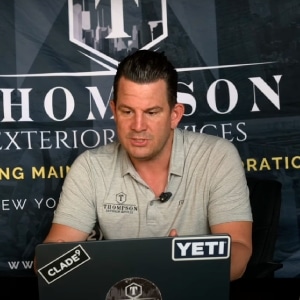
To understand how Thompson Exterior Services navigates these conditions, we spoke with two key leaders: Project Manager Laura and Operations Manager Aaron. Their insights reveal how weather impacts real projects—and how our team protects workers while keeping clients informed and projects moving.
How Weather Forces Rapid Project Restructuring
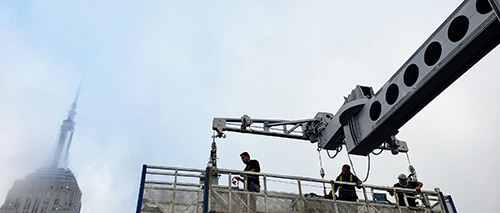
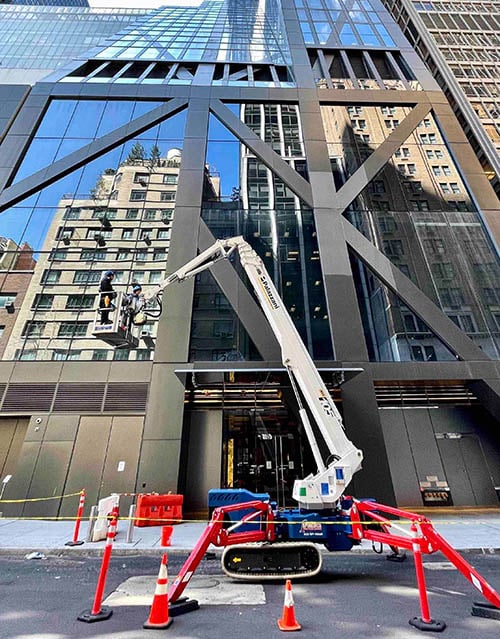
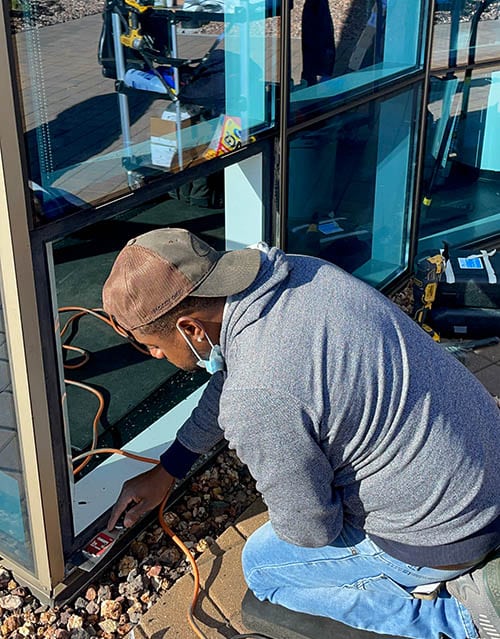
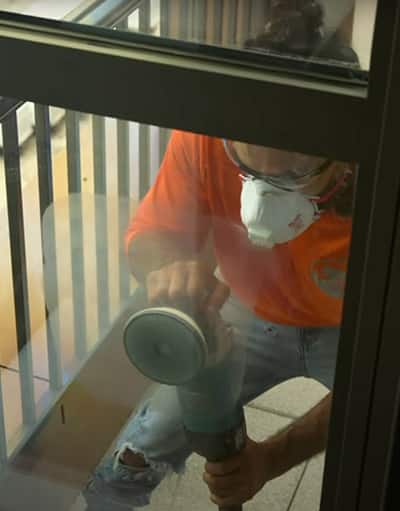
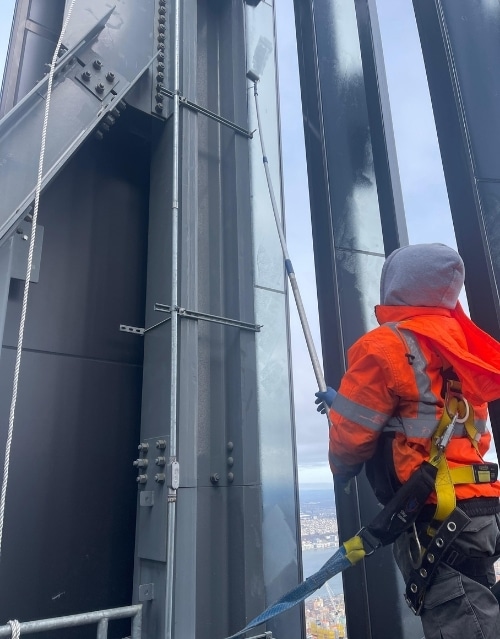
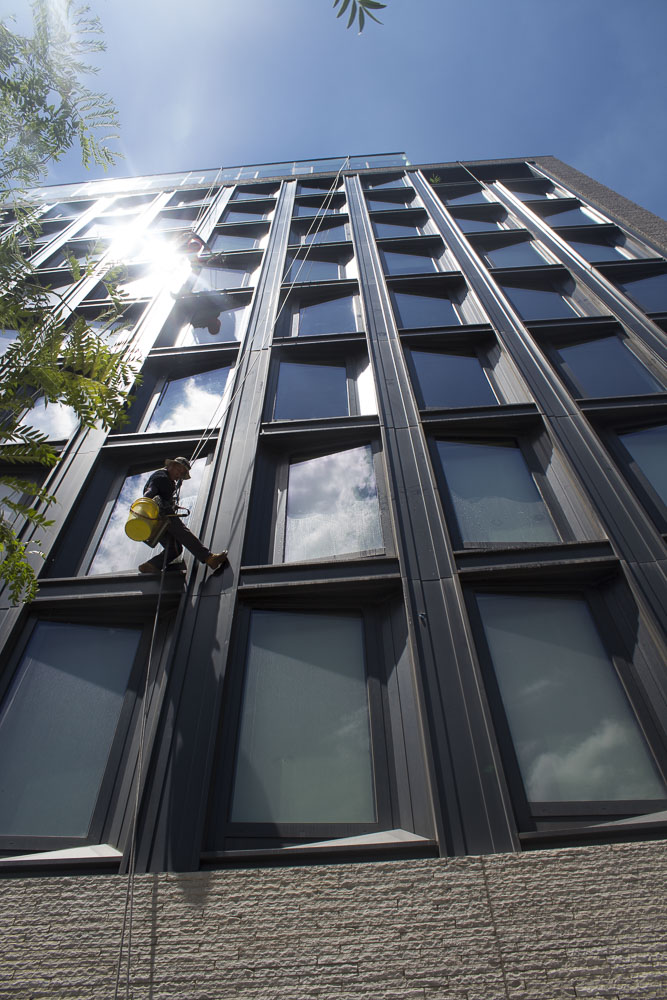
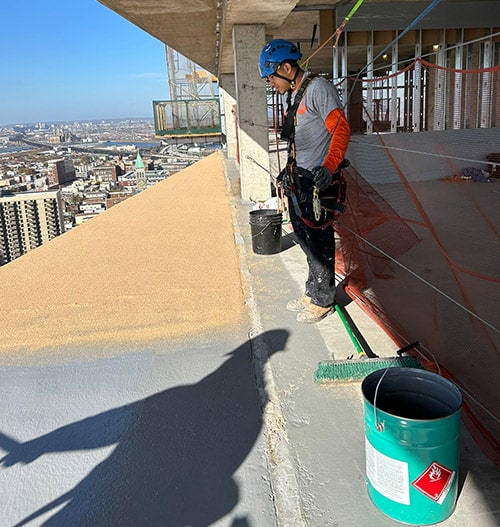
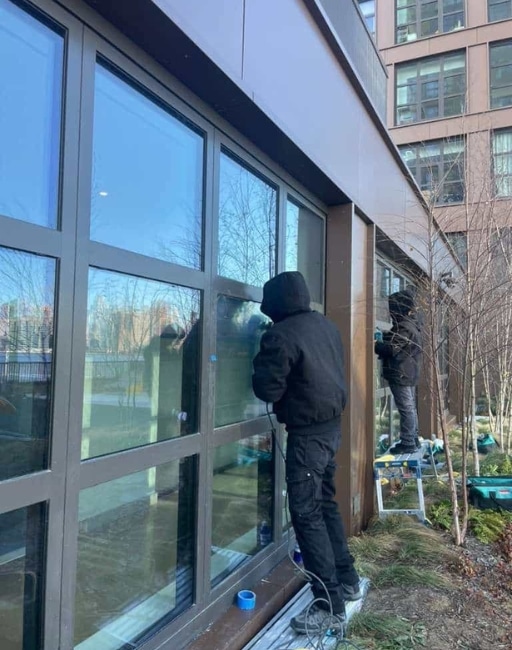
We are currently executing a glass restoration project at 1 Huron, where our Project Manager, Laura, has reported several challenges over the past few weeks. Rain, strong winds, and temperatures dropping below 35°F have forced immediate adjustments.
At that temperature, glass polishing becomes unsafe, and certain restoration products can freeze, so the team conducted a cold-weather test to ensure the materials stayed at room temperature and remained usable on site.
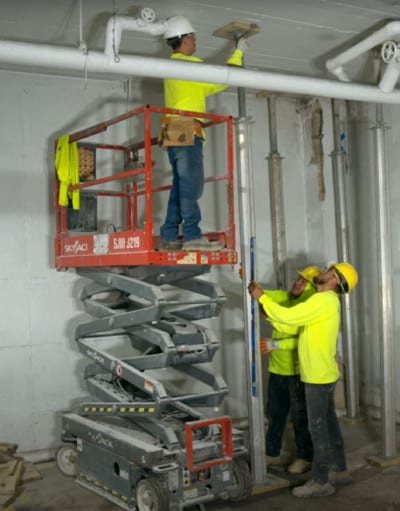
“When weather becomes more manageable, we assign areas inside the building so the team can continue progressing. The goal is always to keep moving forward and find solutions.”

Communicating Weather Delays With Clients
Weather delays impact residents, property managers, and project expectations. For Laura, transparency is essential:
“One of the most important things is giving clients an estimated return date and a schedule showing when we can resume work.”
Even when work cannot begin as planned, clear communication maintains trust:
“This week we couldn’t start the job and our tools remained in their spaces, so it’s essential to give clear, constant updates explaining what is happening and when we can return.”
The Operations Manager’s Perspective: The Hardest Weather to Manage
Operations Manager Aaron coordinates crews across multiple job sites in real time. His biggest challenge:
“Wind and rain! they’re extremely unpredictable. In high-rise residential buildings, clients want to schedule work in advance, but the forecast can change from one minute to the next.”
This unpredictability requires continuous recalibration of risk, logistics, and labor. Aaron notes that schedule changes vary by service:
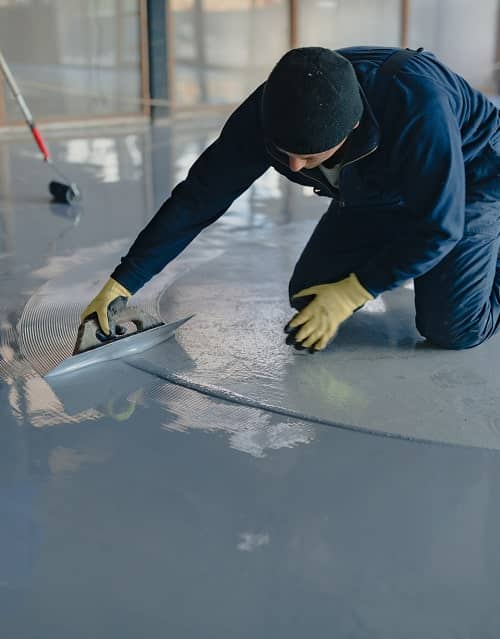
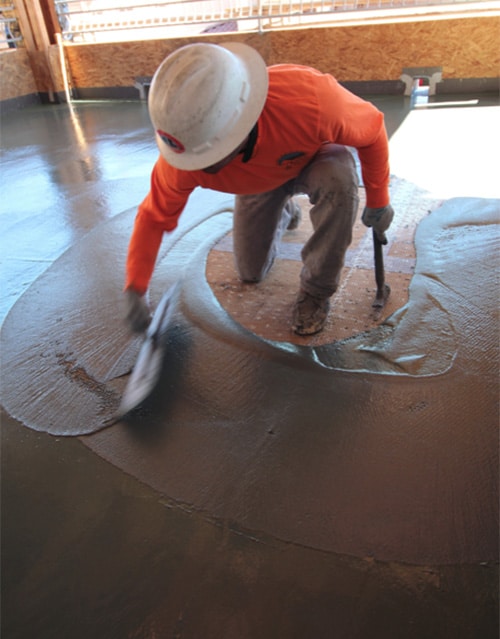
“Every job is different—it depends on the service we’re providing and whether curing times are involved.”

Our Commitment in These Situations
What makes Thompson Exterior Services effective in extreme weather isn’t just experience—it is coordination, communication, and disciplined safety practices:
- Real-time crew reassignment when weather shuts down work
- Honest, proactive communication with clients
- Flexible scheduling that adapts to curing times and equipment limitations
- Safety-first decisions that protect workers at all costs
NYC’s winter weather will always test the industry, but our team rises to the challenge through preparation, communication, and a highly trained workforce that knows how to work safely in a rapidly changing climate.

Thank you for reading! We invite you to subscribe to our newsletter, High-Rise Heroes and follow us on Instagram, Facebook, and YouTube: @Thompson_Touch